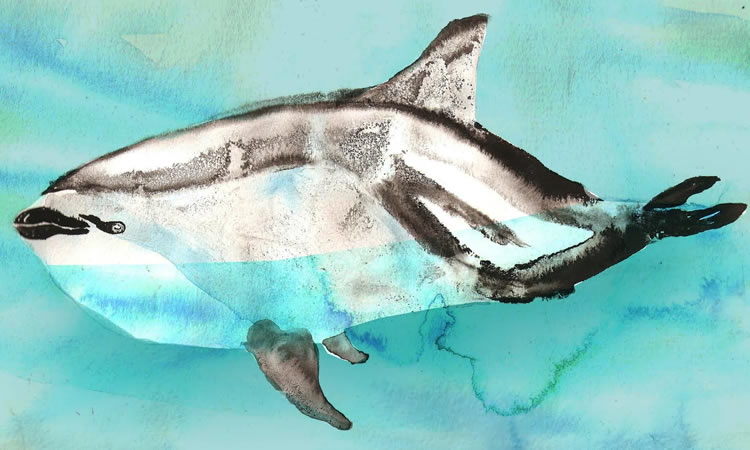
Its scientific name is Lagenorhynchus Obscurus. It features a small body with a dark grey back and and a white belly. Its dorsal fin is two-toned. It has a short, thick and dark snout. Its weight ranges between 50 and 90 kilograms and it can measure up to 2 meters of length. It is a very curious animal and once it is spotted, it is easy to reach. It is usually seen in the coldest southern seas.
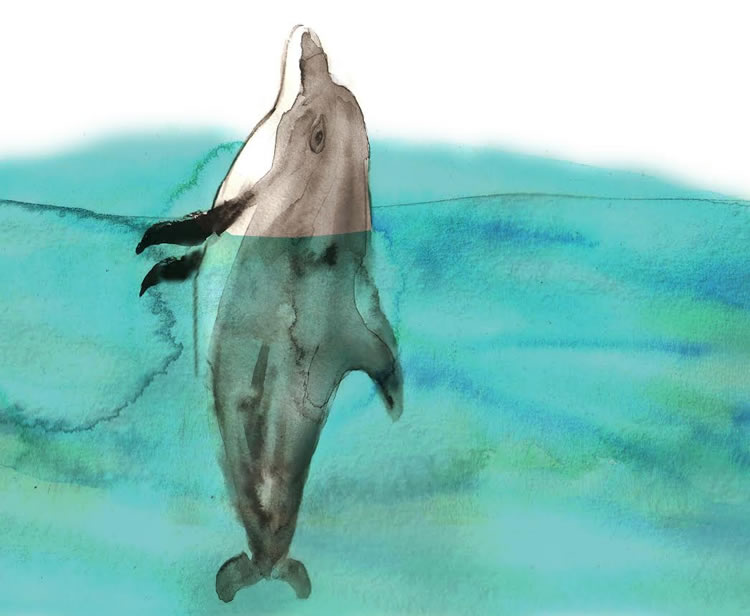
Television and the movies have made this species famous through the memorable character known as Flipper. Its scientific name is Tursiops Truncatus. It is a bulky dolphin featuring a muted grey shade that becomes darker on its back. It has a short bottle-shaped snout after which it has been named. It can measure from 2 to 4 meters of length, where its weight ranges between 150 and 700 kilograms. Due to its behavior, it is considered one of the funniest dwellers in the sea: it approaches swimmers, plays with them, escorts the boats in their routes and jumps when it is in a good mood.
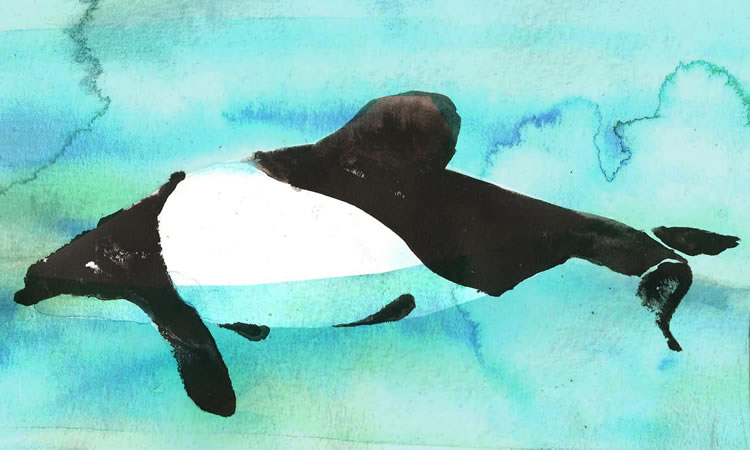
It is famous for its white and black tones and for its high swimming speed. It is one of the protagonists off the shores of Rawson, where it even has its own monument. However, it wanders around almost the entire Patagonian sea. Its scientific name is Cephalorhynchus Commersonii. It can weigh about 60 kilograms, though its average weight is 45 kilos. They are small when compared with other cetaceans. They do not surpass 1.5 meters of length. They are excellent swimmers and perform great jumps: one of the greatest attractions is that they move in groups of up to twenty specimens. Therefore, it is assumed that they lead a community life. The dwell the entire Patagonian littoral.
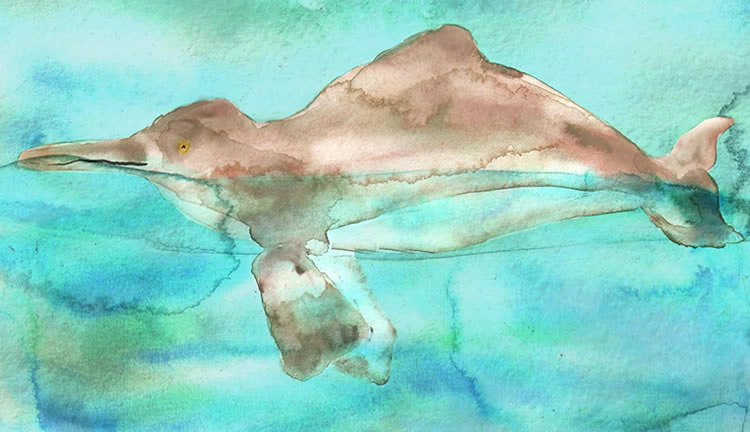
It is a mixture of dolphin and penguin. Its scientific name is Pontoporia Blainvillei. Its back is greyish brown and its belly is white. It has a long narrow beak. Its dorsal fin is small and its pectoral fins have the shape of a spatula. It does not surpass the 1.5 meters of length and its average weight is 40 kilograms. It generally does not jump and it barely shows its body outside the water. It is slower than other dolphins. It is generally seen from the shore.
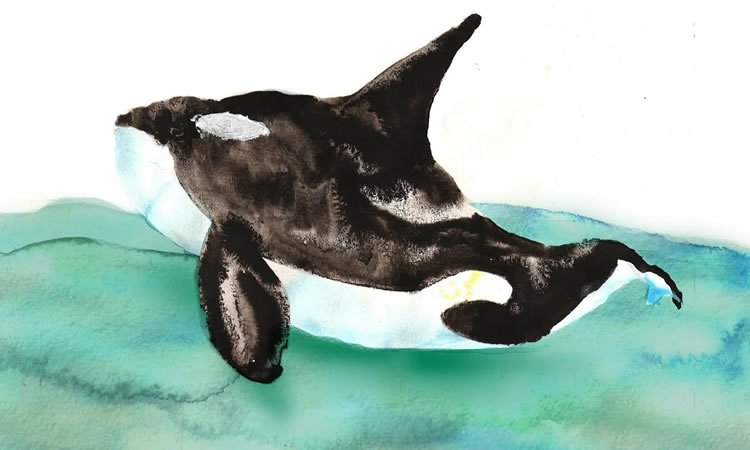
Famous worldwide for being the protagonist of the film Free Willy and wrongly called "killer whale", the orca is a sea dweller whose diet includes sea lions, penguins and sea elephants. Its scientific name is Orcinus Orca and it can measure more than 10 meters and weigh more than 9 tons. It has a stocky black body with a white belly. It has white spots behind the eyes and in some areas of its tail. The dorsal fin is very significant and its pectoral fins (to the sides) are wide and have the shape of fat spatulas. Beyond its remarkable weight, they are known for their acrobatics (jumps, turns and high speed in short stretches) and because they usually get out of the sea to search for their prey on the shore. These behaviors may be appreciated in some spots on the Valdés Peninsula, as well as along the Patagonian coastline.
One of the many anecdotes told at the Valdés region refers to what happened to one of the first whale watching tour guides. The story goes that a boat set sail to watch whales and that many of its passengers were disabled. There were even some blind people on board. After the jumps, the tails and noise of these giants falling into the water, an impressive silence was suddenly present.
All of a sudden, a huge right whale showed its tail outside the surface and slowly, very slowly slided it softly along the boat rail with such delicacy that the passengers were able to touch it, even the blind people who, in addition to hearing the noise from the jumps could feel them with their own hands. This is a very unusual event, but it helped operators to find a new alternative: the disabled, even the blind, may watch the whales. Undoubtedly, these magnificent mammals are for all those who wish to approach and see them.