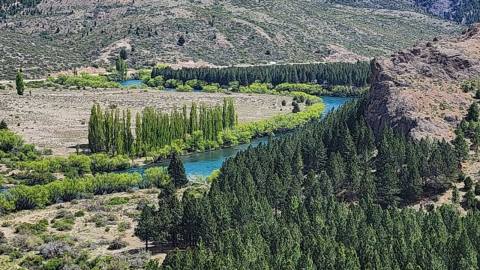
The Manso River is well known for its plentiful volume, its incredible turquoise hue and because its rapids are the most coveted by lovers of rafting. Of course it is also one of the natural attractions protected by Nahuel Huapi National Park. One alternative to tour around this spectacular river will take us down to the Chilean border. Another one will cover a stretch of the Lower Manso. Leaving out Bariloche, and after crossing Lakes Gutiérrez, Mascardi and Guillermo, take a detour at the Villegas River which leads straight to La Pasarela camp site. At this spot, various guides from different companies will provide very interesting safety instructions and explain the basic rafting techniques. The summits and the forests with their huge trees make up a stunning context to practice this adventure sport, which will start once the participants put on their life vests and helmets. Everything starts quietly, paddling softly downriver.
Rafting and Adventure on the Manso River
Several options to visit and enjoy one of the most beautiful rivers in Nahuel Huapi National Park.
-
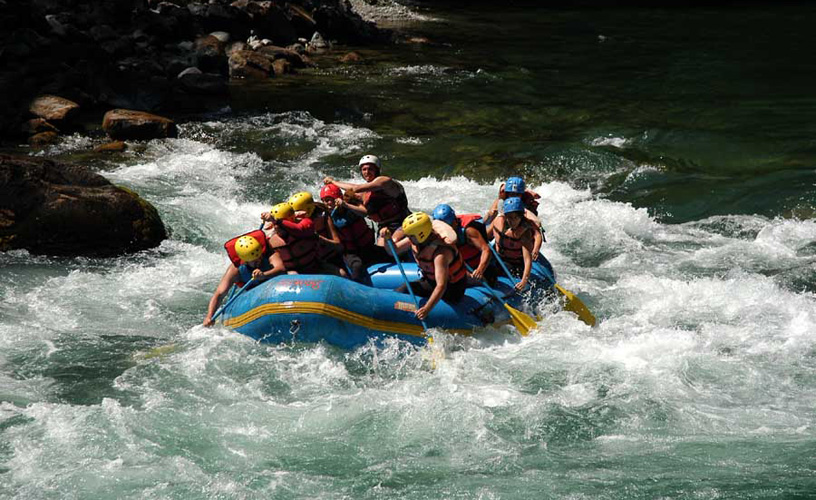
Adventure on the Manso River
-
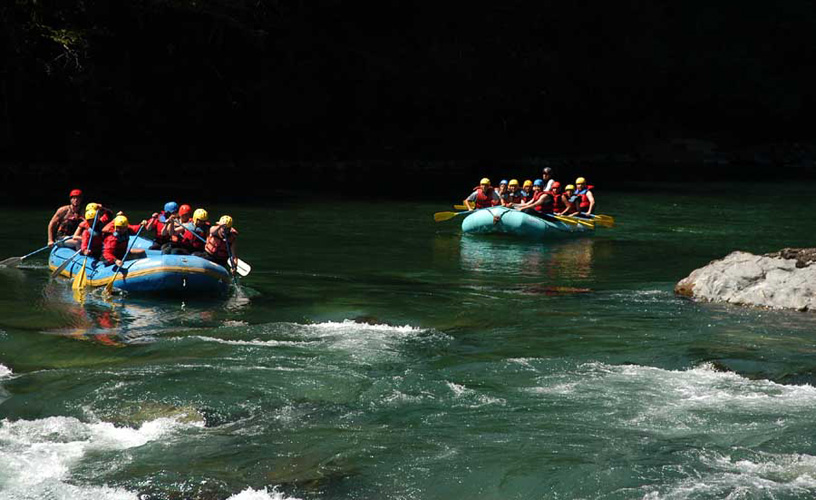
Nahuel Huapi National Park
-
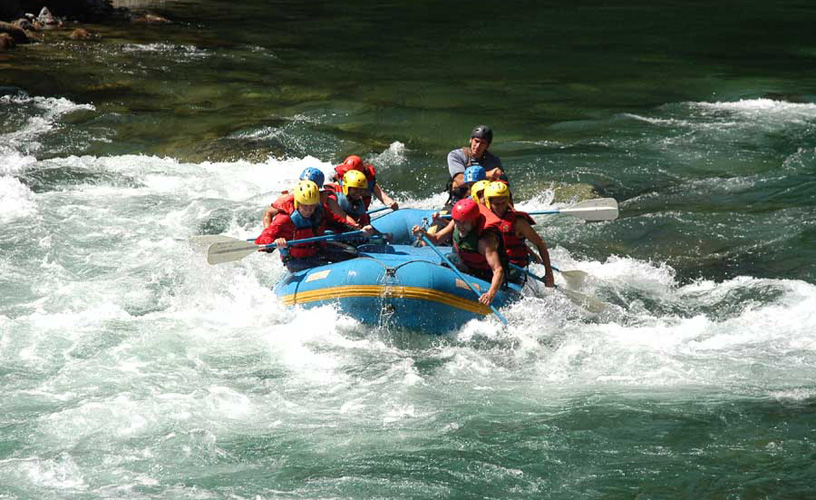
Incredible turquoise hue
-
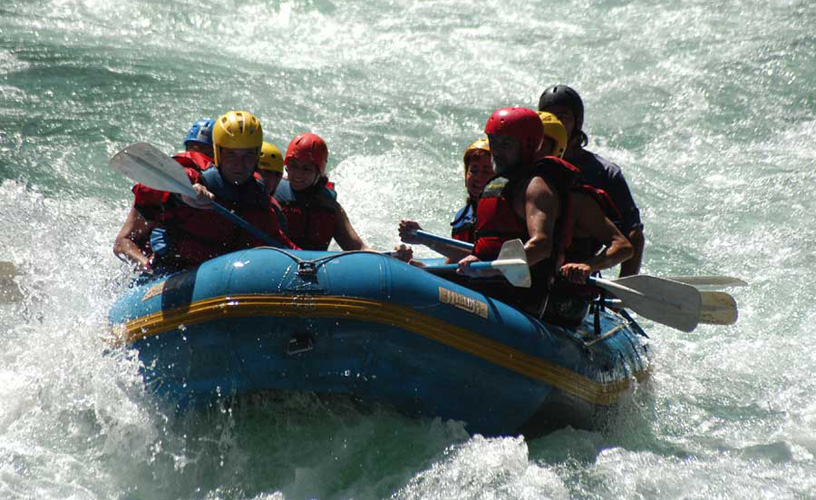
The pulse accelerates considerably
-
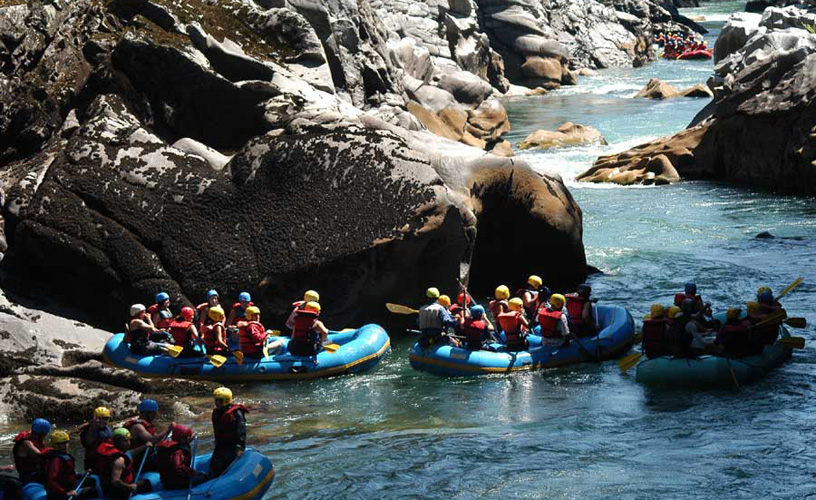
Reach such a paradise
-
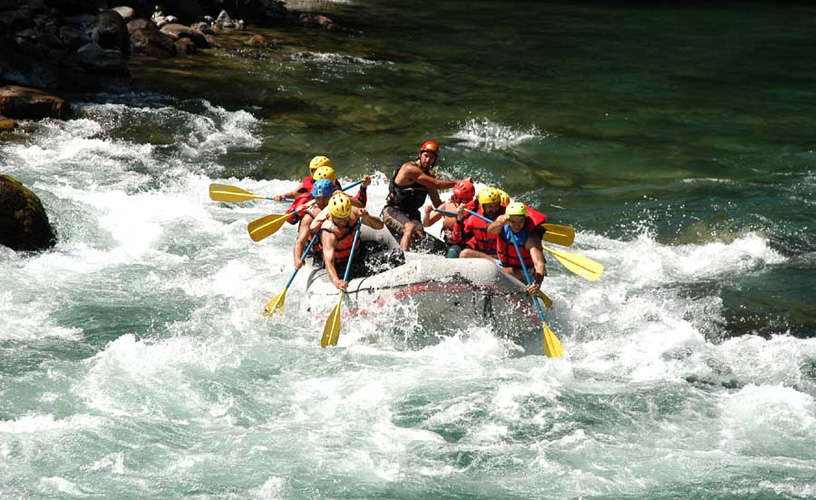
The euphoria and adrenaline
-
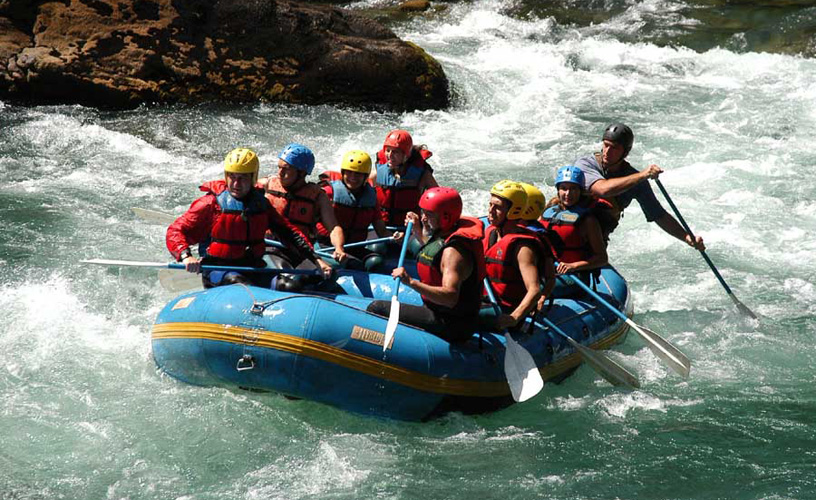
Is a safe activity
Towards the Chilean Border
Rafting is a safe activity. There are no reasons to feel afraid. In general, the RIB is escorted by a safety kayak whose responsibility is to study they river course carefully. At the beginning, the rapids are mild and they do not represent a great hazard to navigation. Thus, paddlers become gradually adapted to the situation. The noise and the movements begin at the exit of the Terciopelo (Velvet) Ravine. The pulse accelerates considerably. At this spot, the Manso River leaves the calmness behind and gives way to class-I rapids, usually combined with violent class-IV torrents. Amidst the euphoria and adrenaline, the guides encourage the paddlers to increase their activity to face the most complicated parts of the river –near the Chilean border- successfully. The exploit culminates at a private venue, in the heart of the Argentinian-Chilean territory. The scenery confirms that the most violent rapids in the Manso River were totally worth crossing to reach such a paradise, where the river gets calm again.Manso for Beginners
The lower Manso is ideal for those who wish to experience rafting for the first time. At this spot, the river is quieter and it provides an excellent opportunity to see the center of Nahuel Huapi National Park. Once immersed in the park, Huala–Hue Pond and Lake San Martín may be visited. The agencies offering this tourist option reach the Steffen water body, where the lower Manso begins. After a short safety chat which includes navigation techniques, the descent begins. During the first hour of the tour, the Manso remains quiet. This is an ideal moment to get to know the tree species that dwell near the river: cypresses, maytens, Chilean myrtles, coihues, radales and chilcos, to name a few. Contact with nature is also provided by the local birds. Some of them include kingfisher, southern lapwing, buff-necked ibis and great bustards. Amusement begins at the next stretch of the crossing with class-II and III rapids. After much effort, a pause lets adventurers enjoy a delicious and revitalizing picnic. During the second part of the tour, the Uvasal, Banda de Billar and Diente de Hipopótamo (Hippo’s Tooth) rapids arrive and, afterwards, the RIBs go along an area called Montaña Rusa (Rollercoaster) and a great challenge known as Roca Magnética (Magnetic Rock). Eventually, the Manso and the Villegas join quietly to give shape to backwaters where adventurers may dive in and freshen up in the summer. To put an end to this exciting activity, the RIBs must cross the last rapids in the river and then, as they get to the valley, paddlers will learn that the rafting adventure is over. Once on solid ground, everyone celebrates the exploit with tea, coffee or a cool drink and delicious tortas fritas.  Marcos Rodríguez
  Palmiro Bedeschi
Contact of the excursion or tour
Aguas Blancas Rafting
Morales 564, San Carlos de Bariloche, Río Negro, Argentina
Patagonia Rafting
San Martín 86, San Carlos de Bariloche, Río Negro, Argentina
Extremo Sur
Morales 765, San Carlos de Bariloche, Río Negro, Argentina
Punto Límite
Mitre 442, San Carlos de Bariloche, Río Negro, Argentina
 Phone: +54 294-4525362
  Cell Phone: +54 2944-602827
 Tour Kind: River rafting
 Level of Difficulty: Medium
 Duration: All day
 How to get here: 70 km to the South of Bariloche, take National Route 258 up to the Villegas River. From that point, take a detour and go along 30km to the West up to the La Pasarela camping site, which is crossed by the Manso River.
 This activity is advisable for children over 6 years old. However, kids under 12 should be accompanied by their parents. In the case of people over 60, it is important to be in good physical shape.
It is essential to wear sports clothes and footwear, to pack a complete change of clothes, bathing suit and sun protection.

 Twitter X
 WhatsApp
 Facebook
 E-mail
 Copy Link