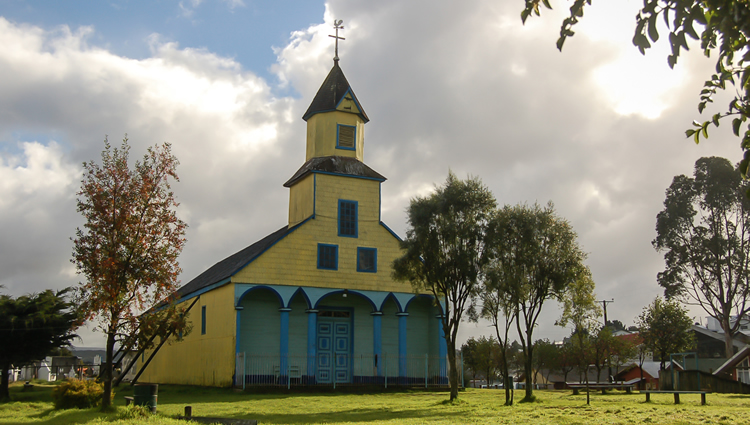
The Chiloé Archipelago treasures an invaluable cultural and religious heritage as a result of the several churches built by the Jesuit and Franciscan orders during their evangelizing missions. The former date back from the seventeenth century and approximately 60 temples remain. Sixteen of them are the most representative.
They correspond to the the Chilota School of Religious Architecture in Wood and its technique developed from the crafts of riverside carpenters and the influence of the handwork contributed by the monks. Originally, hard wood from cypresses, coigües or mañios were used for beams and pillars. Plugs made of luma wood were used for joints and dovetails and mortises. These were the resources used over 100 years ago.
The buildings have some details in common: their location near the shore, as well as the facts that they are surrounded by mountains on the north and that their porticos face south. These measures were taken to protect them from the abundant rainfall in the region. A space similar to a square where outdoor celebrations were held was reserved in front of each of them. In general, they occupied a large area, featured a gable roof and foundation stones that insulated them from the surrounding humidity. The cemetery lay to one side.
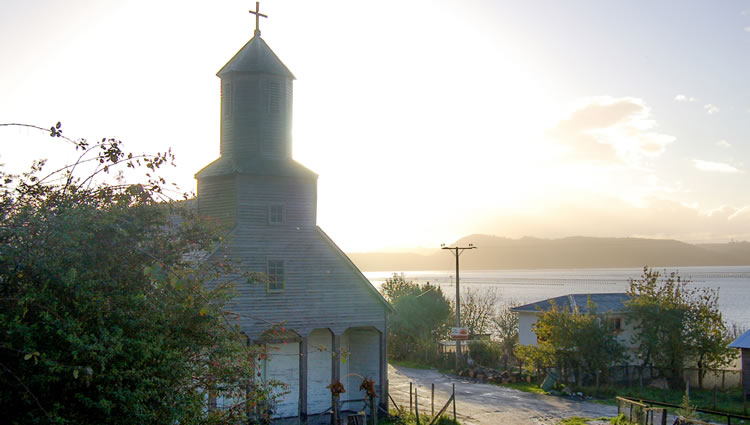
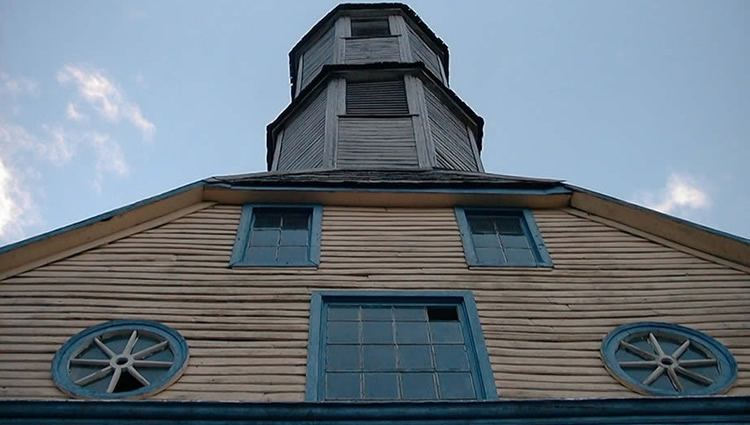
As far as their typology is concerned, they boast similar shape, decoration and size traits with some individual variations. The typical elements are the façade and tower, both of them symmetric. The former is made of an entrance portico, arcade and pediment. The tower has an outstanding symbolic feature, as it supports the cross and the bells. In turn, it has served as an orientation element for sailors. The vaulted ceiling of most of the churches consists of barrel vaults and only three of them present groin vaults. Inside, the basilica floor plan and the three aisles are repeated, in addition to the priests' facilities. Outside, most of the surface is covered by Patagonian cypress wood tiles and tongue and groove joints.
All the churches are over a hundred years old and some of them have been rebuilt on the very spot they were raised for the first time, boasting the same features by carpenters of the Chilota school. The foundation known as Fundación Amigos de las Iglesias de Chiloé is in charge of the restoration of those buildings whose structures have become frail in order to preserve this valuable cultural heritage.
The sixteen most representative churches have been declared Chile's National Monuments and World Heritage by UNESCO.
FUNDACION AMIGOS DE LAS IGLESIAS
Address: 227, Federico Errazuriz Street, Ancud - Chile
E-mail: contacto@iglesiasdechiloe.cl
TE: 65 621046/ 9 8745721