It is said that in order to really get to know a city, visitors should tour around the surroundings of its main square, enter its churches and temples and visit its cemetery. The Punta Arenas cemetery lies at the entrance of the city and, in addition to having a singular architectural value, it keeps the remains of pioneers and of the main families that gave origin to the entire population of the region. Founded in 1894, the present cemetery replaced its predecessor, which used to be located where José de los Santos Mardones Square stands today. As part of the urban heritage, it was built in a venue granted by the Government. In 1919, engineer Fortunato Circutti was in charge of building the magnificent portico and the perimeter walls donated by pioneer Sara Braun and named after her. On the other hand, artist Pascual Borich sculpted the crowns and other decoration details that make up the façade.
Eternal Rest
The cemetery of Punta Arenas tells the story of the city in silence. Its mausolea and the quiet park give shape to one of the most visited spots in the urban tour.
-
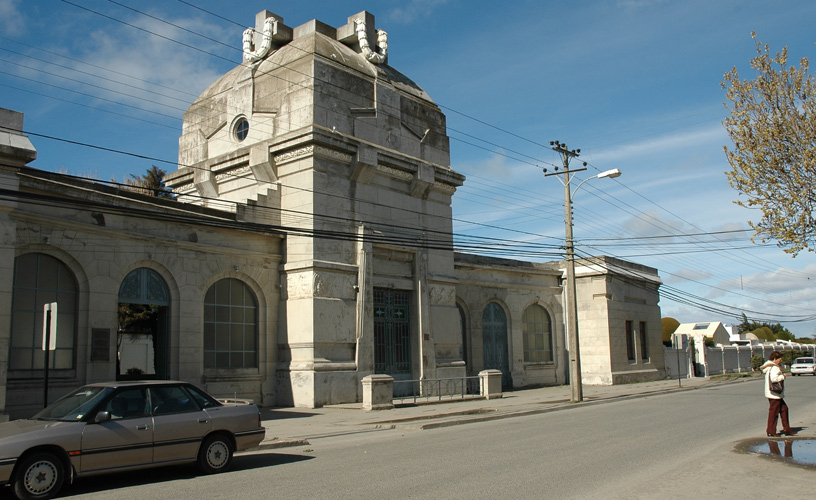
The magnificent portico
-
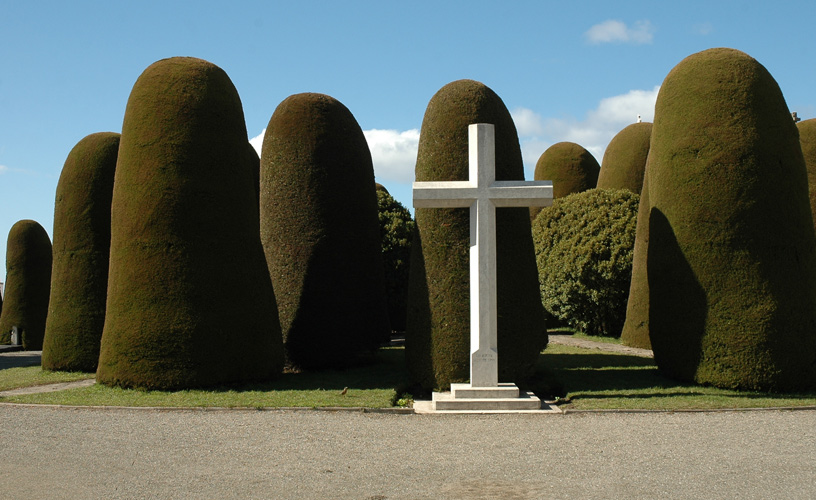
An exquisitely kept park
-
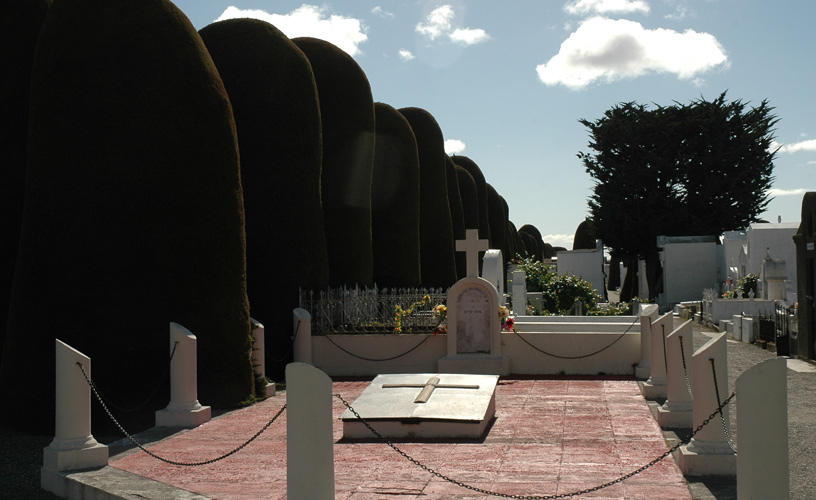
Tells the story of the city in silence
-
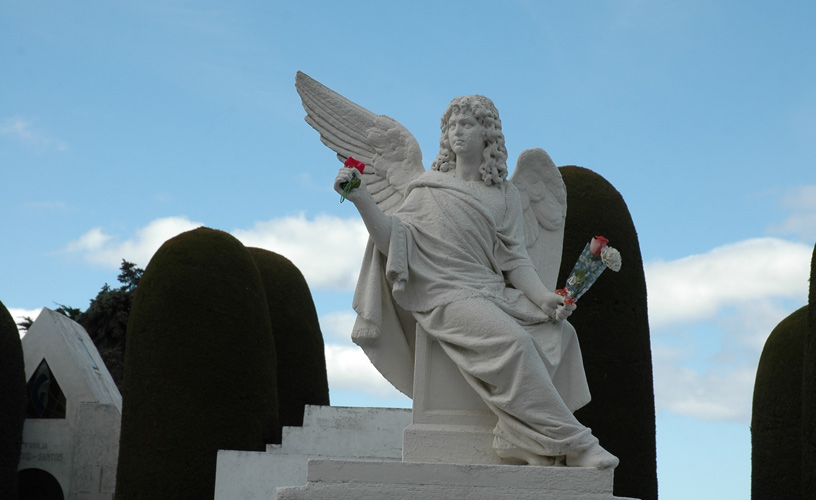
A historical place
In the Quietness of the Park
An exquisitely kept park is the place chosen by visitors to behold. European cypresses grow on the avenues granting an English touch to these open spaces. The inner paths lead to tombs and mausolea, some of them ornamented with various styles and marble and brass terminations and sculptures of forged iron. The chapels built during the first three decades of the XXth century, which belong to the most important families in the region, lodge the remains of the Menéndez-Behetys, the Braun Hamburgers, the Blanchards, the Kusanovics, the Menéndez-Montes and Sara Braun. Likewise, various institutions also have their own buildings, such as the mutualist societies, the foreign colonies and the Salesian order, whose chapel was designed in 1902 by father Juan Bernabé.  Karina Jozami
  Jorge González
 Tour Kind: contemplative.
 Level of Difficulty: low.
 Duration: 2 hours.
 Far from prejudice and superstition, the cemetery is a historical place very much visited by travelers. You will not regret touring around it.
 Twitter X
 WhatsApp
 Facebook
 E-mail
 Copy Link