The first thing one must do in becoming familiar with the sport of fly-fishing is choosing the fly rod, which is the fly-fisherman’s friend and companion in adventures. The enormous selection of fly rods available on the market today can bewilder beginner fly-fishermen. Nonetheless, selecting a fly rod does not need to be a difficult decision. When choosing your fly rod it is important to have a couple recommendations in mind.
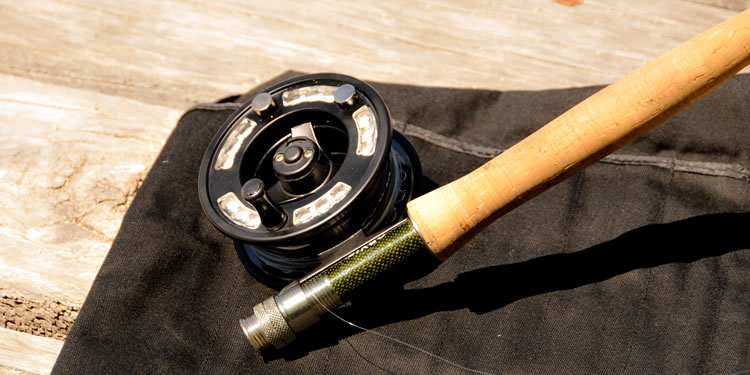
Up until the mid-twentieth century fly-fishermen used bamboo fly rods. The golden decade of the 1960’s marked the beginning of a revolution in the materials used in constructing sporting equipment. Fiberglass fly rods that were lighter weight and less expensive were introduced and became widely used by fishermen. By the 1970’s, however, carbon fiber and graphite rods appeared and eventually became the most popular fly rod material, entirely replacing fiberglass in the industry.
A rating system has evolved to describe the many different types of rods used for fly-fishing. Most importantly, fly rods are classified according to “weight”—a number between 4 and 20 that describes a rod’s stiffness and strength. The weight is then coordinated with specially rated fishing lines—a number between 1 and 15—to achieve optimum performance when fishing specific river sizes, weather conditions, and even according to a fish’s breed. Add to these classifications the need to consider a fly rod’s action or “feel”, and then wade through the dozens of fly rod manufacturers on the market today, and selecting a fly rod becomes a challenging task for the beginner fisherman.
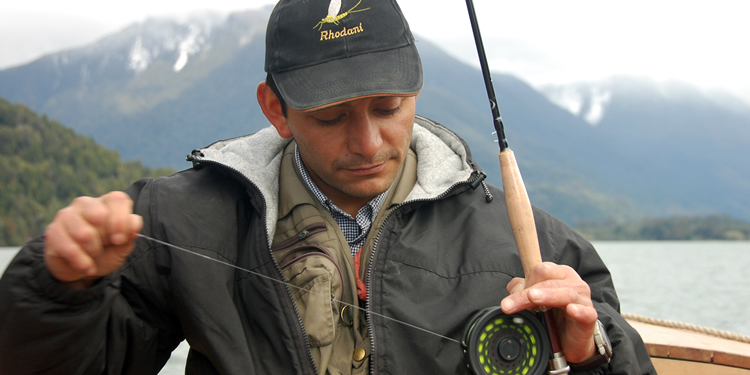
A carbon fiber or graphite fly rod from a reputable manufacturer is most commonly recommended for first time fly-fishermen. In addition to being readily available in most fly shops, these rods often have the additional benefit of being guaranteed for life. Reputable warranties will replace a rod that has been damaged in any way; from manufacturer defect to accidental breakage, even if a rod is accidentally slammed in a car door. Buying a quality rod is a solid investment because it will last forever. Purchasing used fly tack is an option, and beginners are advised to bring a friend to ensure the quality of the equipment.
For a first-time fly fisherman, a 6 or 7-weight fly rod around 8 or 9 feet long is ideal. This fly rod is well suited for trout fishing in mid and large-sized rivers as well as fishing for the popular smaller-sized dorado fish on Argentina ’s coasts. It’s a good all around “training” fly rod that will serve beginners well for learning to fly-fish.
Different fly rods are employed according fish size and a river’s environments. 1, 2, or 3-weight rods are used for small fish in mild environments; 4 or 5-weight rods for bigger fish in the same environments; 6 or 7-weight allows fishermen to catch large fish in more difficult environments; and 8-weight rods and higher are used for catching big fish in difficult, windy environments—such as the popular dorado fish.
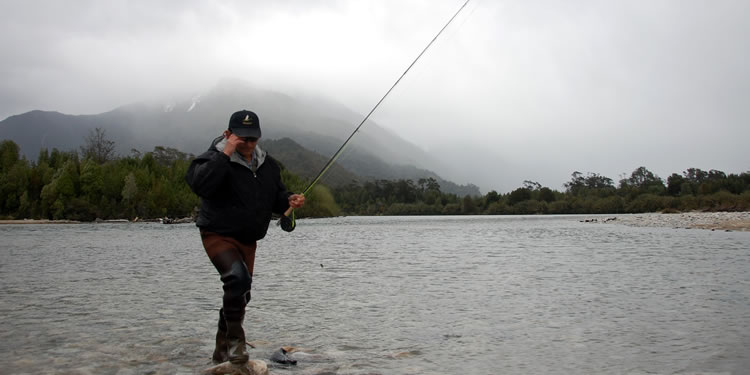
Bamboo fly rods hold a venerable position in the sport of fly-fishing. These rods continue to be manufactured as they have been throughout history, by hand. Their prices are quite high and, while their quality is excellent, bamboo fly rods are not recommended for beginner fly-fishermen because the fly-casting technique they require is difficult to acquire, even after the first couple fishing trips.
The fly reel does not have the same vital importance as it with other sport fishing. A reel is composed of a spool-like device whose principal function is to store a long amount of fishing line. Nonetheless, selecting an adequate fly reel will largely determine a fisherman’s success.
Minute differences
The primary differences among fly-fishing reels are the difference in braking mechanism. The braking system is what controls how much fly line is released at what rate of speed, intended for the scenario when a large fish takes a fly and attempts to swim up or down stream to escape. The most common is the friction brake system—similar to the drum brake of a car in design—which a fisherman controls manually. The highest quality reels have a disk brake design that allows the reel to give constant braking resistance without needing to be operated by hand.
The basic considerations when purchasing a fly reel is the circumference and how much reserve backing it can contain. The circumference of a reel is determined in relationship to the size, weight, and strength of the intended sport fish. These factors are also taken into account when deciding how much “backing” fishing line a fly rod will hold. “Backing” is nothing more than a reserve of dracon (¿) fishing line that won’t deform, break, or stretch and is wound onto a reel before attaching the regular fly fishing line.
A quality fly reel is quickly interchangeable, allowing fishermen to trade between floating or sinking lines as the conditions of a river may require. For this reason, fly reels are universal, and not constructed for specific floating or sinking fly lines. Fly reels of excellent quality exist for every type of fly-fishing sport activity.